sexta-feira, 1 de outubro de 2010
Economy
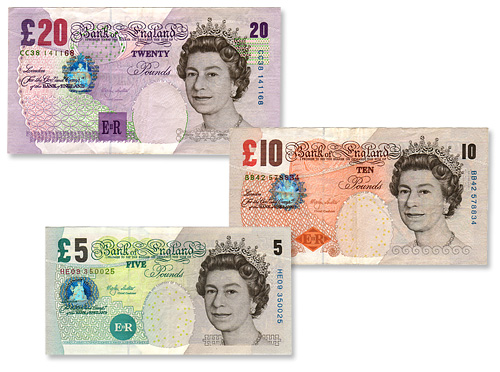
England's economy is one of the largest in the world, with an average GDP per capita of £22,907. Usually regarded as a mixed market economy, it has adopted many free market principles in contrast to the Rhine Capitalism of Europe, yet maintains an advanced social welfare infrastructure. The official currency in England is the pound sterling, also known as the GBP. Taxation in England is quite competitive when compared to much of the rest of Europe—as of 2009 the basic rate of personal tax is 20% on taxable income up to £37,400, and 40% on any additional earnings above that amount.


Population
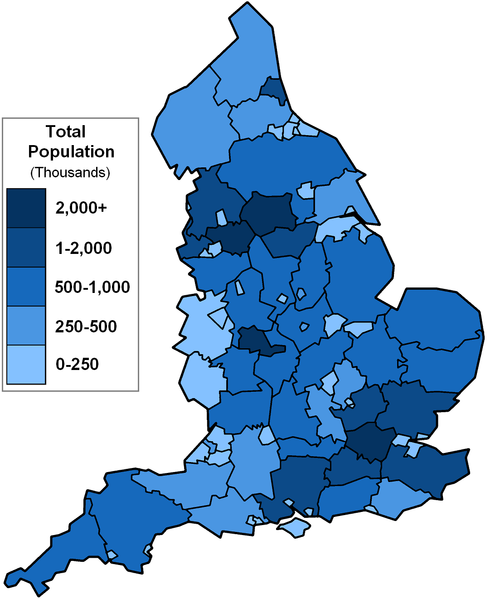 With over 51 million inhabitants, England is the most populous country of the United Kingdom, accounting for 84% of the combined total. England taken as a unit and measured against international states has the fourth largest population in the European Union and would be the 25th largest country by population in the world.With a density of 395 people per square kilometre, it would be the second most densely populated country in the European Union after Malta.
Folklore

 English folklore developed over many centuries. Some of the characters and stories are present across England, but most belong to specific regions. Common folkloric beings include pixies, giants, elfs, bogeymen, trolls, goblins and dwarves. While many legends and folk-customs are thought to be ancient, for instance the tales featuring Offa of Angeln and Weyland Smith, others date from after the Norman invasion; Robin Hood and his Merry Men of Sherwood and their battles with the Sheriff of Nottingham being, perhaps, the best known.
During the High Middle Ages tales originating from Brythonic traditions entered English folklore—the Arthurian myth. These were derived from Anglo-Norman, French and Welsh sources, featuring King Arthur, Camelot, Excalibur, Merlin and the Knights of the Round Table such as Lancelot. These stories are most centrally brought together within Geoffrey of Monmouth's Historia Regum Britanniae.Another early figure from British tradition, King Cole, may have been based on a real figure from Sub-Roman Britain. Many of the tales and pseudo-histories make up part of the wider Matter of Britain, a collection of shared British folklore.

Music

The achievements of the Anglican choral tradition following on from 16th century composers such as Thomas Tallis, John Taverner and William Byrd have tended to overshadow instrumental composition. The semi-operatic innovations of Henry Purcell did not lead to a native operatic tradition, but George Frederick Handel found important royal patrons and enthusiastic public support in England. The rapturous receptions afforded by audiences to visiting musical celebrities such as Haydn often contrasted with the lack of recognition for home-grown talent. However, the emergence of figures such as Edward Elgar and Arthur Sullivan in the 19th century showed a new vitality in English music. In the 20th century, Benjamin Britten and Michael Tippett emerged as internationally-recognised opera composers, and Ralph Vaughan Williams and others collected English folk tunes and adapted them to the concert hall. Cecil Sharp was a leading figure in the English folk revival.

Finally, a new trend emerged out of Liverpool in 1962. The Beatles became the most popular musicians of their time, and in the composing duo of John Lennon and Paul McCartney, popularized the concept of the self-contained music act. Before the Beatles, very few popular singers composed the tunes they performed. The "Fab Four" opened the doors for other English acts such as The Rolling Stones, The Hollies, The Kinks, The Who, Queen, Led Zeppelin, Black Sabbath, and Pink Floyd to the globe.
Some of England's leading contemporary artists include Elton John, George Michael, Blur, The Spice Girls, Bloc Party, Arctic Monkeys, Robbie Williams, Oasis, Radiohead, David Bowie, Coldplay, Muse, Amy Winehouse and Mcfly.
Literature
English literature begins with Anglo-Saxon literature, which was written in Old English. For many years, Latin and French were the preferred literary languages of England, but in the medieval period there was a flourishing of literature in Middle English; Geoffrey Chaucer is the most famous writer of this period. The Elizabethan era is sometimes described as the golden age of English literature, as numerous great poets were writing in English, and the Elizabethan theatre produced William Shakespeare, often considered the English national poet.

Due to the expansion of English into a world language during the British Empire, literature is now written in English across the world. Writers often associated with England or for expressing Englishness include Shakespeare (who produced two tetralogies of history plays about the English kings), Jane Austen, Arnold Bennett, and Rupert Brooke (whose poem "Grantchester" is often considered quintessentially English). Other writers are associated with specific regions of England; these include Charles Dickens (London), Thomas Hardy (Wessex), A. E. Housman (Shropshire), and the Lake Poets (the Lake District). In the lighter vein, Agatha Christie's mystery novels are outsold only by Shakespeare and The Bible.
Culinary
Since the early modern era, the food of England has historically been characterised by its simplicity of approach, honesty of flavour, and a reliance on the high quality of natural produce. This has resulted in a traditional cuisine which tended to veer from strong flavours, such as garlic, and an avoidance of complex sauces which were commonly associated with Catholic Continental political affiliations. Traditional meals have ancient origins, such as bread and cheese, roasted and stewed meats, meat and game pies, and freshwater and saltwater fish.
Modern English cuisine is difficult to differentiate from British cuisine as a whole. However, there are some forms of cuisine considered distinctively English. The full English breakfast is a variant of the traditional British fried breakfast. The normal ingredients of a traditional full English breakfast are bacon, eggs, fried or grilled tomatoes, fried mushrooms, fried bread or toast, and sausages, usually served with a mug of tea. Black pudding is added in some regions as well as fried leftover mashed potatoes (called potato cakes).
 Tea and beer are typical and rather iconic drinks in England, particularly the former. Cider is produced in the West Country, and the south of England has seen the reintroduction of vineyards producing high quality white wine on a comparatively small scale.
Roast beef is a food traditionally associated with the English; the link was made famous by Henry Fielding's patriotic ballad "The Roast Beef of Old England", and William Hogarth's painting of the same name. Indeed, since the 1700s the phrase "les rosbifs" has been a popular French nickname for the English.
 Other dishes invented in or distinctive to England include:
* The English crumpet is a form of crumpet; it is distinguished from its Scottish equivalent by its greater thickness
* Muffins, known as 'English muffins' in North America, are a form of rounded, yeast-leavened bread
* Lancashire hotpot
* Cornish pasty
* Mushy peas
* Worcester sauce
* Clotted cream from Devon and Cornwall
* Yorkshire pudding
* Sausage and mash
* Eccles cake
* Cumberland sausage
* Lincolnshire sausage
* Balti, a form of curry invented in Birmingham
* Apple pie
 |
| A full English breakfast with scrambled eggs, bacon, sausages, black pudding, mushrooms, baked beans, hash browns, and half a tomato. |


Roast beef is a food traditionally associated with the English; the link was made famous by Henry Fielding's patriotic ballad "The Roast Beef of Old England", and William Hogarth's painting of the same name. Indeed, since the 1700s the phrase "les rosbifs" has been a popular French nickname for the English.
 Other dishes invented in or distinctive to England include:
* The English crumpet is a form of crumpet; it is distinguished from its Scottish equivalent by its greater thickness
* Muffins, known as 'English muffins' in North America, are a form of rounded, yeast-leavened bread
* Lancashire hotpot
* Cornish pasty
* Mushy peas
* Worcester sauce
* Clotted cream from Devon and Cornwall
* Yorkshire pudding
* Sausage and mash
* Eccles cake
* Cumberland sausage
* Lincolnshire sausage
* Balti, a form of curry invented in Birmingham
* Apple pie
Architecture and Gardens
 The Neolithic peoples of what would become England constructed many impressive stone circles and earthworks; of these, the largest and most famous is Stonehenge, believed by many English people and foreigners alike to hold an iconic place in the landscape of England. Specifically English architecture begins with the architecture of the Anglo-Saxons; at least fifty surviving English churches are of Anglo-Saxon origin, although in some cases the Anglo-Saxon part is small and much-altered.

Other buildings such as cathedrals and parish churches are associated with a sense of traditional Englishness, as is often the palatial 'stately home'. Many people are interested in the English country house and the rural lifestyle, as evidenced by visits to properties managed by English Heritage and the National Trust.
Landscape gardening as developed by Capability Brown set an international trend for the English garden. Gardening, and visiting gardens, are regarded as typically English pursuits, fuelled somewhat by the perception of England as a nation of eccentric amateurs and autodidacts.

Assinar:
Postagens (Atom)